Macy Chadwick, In Cahoots Residency

A Conversation with Macy Chadwick

Macy Chadwick is the founder and director of In Cahoots Residency in Petaluma, California. Macy is remarkable as a creative residency host in part because she is exceptionally personable with a wonderful gift of giving a story, often with unpredictable humor and resulting laughter. Her own work as a printmaker and book artist is visually poetic and imbued with a sensitive essence of personal reflection. We talked about her work and the running of In Cahoots while sitting under a large oak tree on the residency grounds.
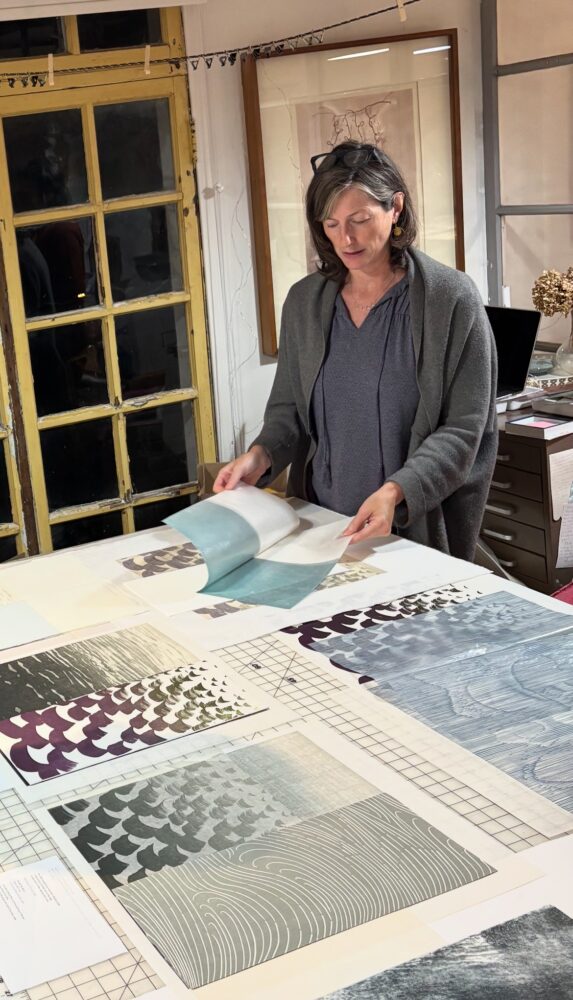
Macy Chadwick in the studio. Photo: Edie Overturf

Nanette: How did you come to art?

Macy: When I was little, I loved all kinds of art, and my mom really encouraged it. I took some after school art classes starting in third grade and continued with that until high school. In order to take the advanced art classes in high school, I had to commit to being an art major in college because the goal of the advanced art classes was to help you prepare a portfolio to apply to college. So I said, yeah, I’ll be an art major in college. Then I decided I really did want to do that. I pursued my BFA, but I was never one of the artsy kids. I didn’t have purple hair or tattoos, still don’t. But I was definitely one of the creative kids, and art has always been a big part of my life.

Nanette: How did you get into printmaking and book arts?

Macy: In undergrad, I was an Illustration major and I never really loved it. I had loved drawing in high school, because that was just what we were offered. In college, I started taking printmaking classes to do my illustrations and then I realized I was actually more interested in making prints about my own ideas and concepts than I was in illustrating other people’s ideas. So, I ended up being a double major in Illustration and Printmaking. 

This was at Washington University in St. Louis. I was very interested in putting my prints into a sequence. At the time, they didn’t have book arts there, so I went to the library and checked out the Japanese Stab Binding book—the one with the green cover. I don’t know why, but that’s the only book on book arts techniques that every library seems to have. So, I learned stab binding, and I taught myself a couple of other bindings in undergrad. 

Between undergrad and grad school, I took Book Arts classes at Oregon College of Art and Craft with Barb Tetenbaum. It was from Barb that I learned the foundation of everything I know about book arts and letterpress printing. I’ve learned more over the years, but Barb taught me so much. As happens with your first teacher—you still reference what they taught you, and who they admired. Barb admired Tim Barrett, Hedi Kyle, Patty Scobey, Julie Chen, and Gary Frost. So, I still admire all those people, and others, too. I continued to study Book Arts and Printmaking in grad school and then I learned more when I moved to Berkeley to work for Julie Chen.
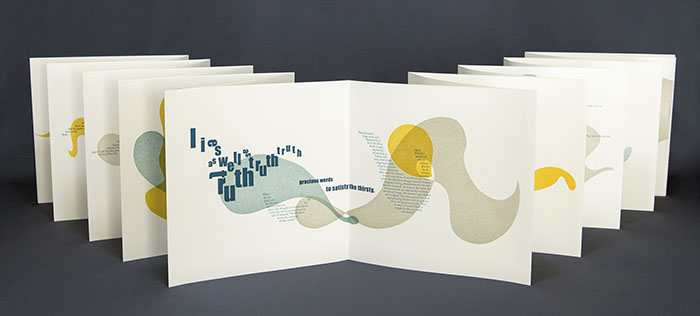
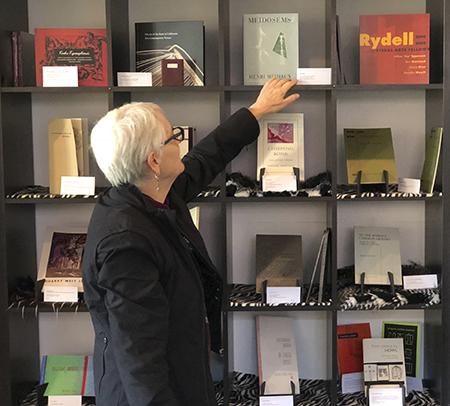
Meanwhile by Macy Chadwick, Limited edition artist book: Letterpress, relief printing; accordion structure in half-clamshell box. Edition of 40, 2017. Photo: Bernhard Uhl

Nanette: When was that?

Macy: I moved to Berkeley in 2003. I had graduated from Wash U in 1994. The rest of the nineties I lived in Portland, Oregon. I studied with Barb at the Oregon College of Art and Craft, which has since closed. Then I went to grad school at the University of the Arts in Philadelphia, from 2001 to 2003. UArts closed recently as well.
Read more

Felicia Rice

Felicia Rice, well known for her fine press work and collaborative books, celebrated 40 years of Moving Parts Press in December with a solo show at Felix Kulpa Gallery in Santa Cruz, California. Rice has worked with notable Californian artists and writers including: Francisco Alarcõn, Elba Rosaria Sánchez, Juan Felipe Herrera, Enrique Chagoya and Guillermo Gómez-Peña. As Moving Parts Press, Rice has received the Rydell Visual Arts Fellowship, Elliston Book Award, Stiftung Buchkunst Schänste Bücher aus aller Welt Ehrendiplom, and grants from the NEA, CAC and the French Ministry of Culture with Perseverance furthers: Moving Parts Press 1977–2017. Rice celebrates her history as printer, publisher, artist and collaborator. We visited the gallery to experience the work, talk about making books and working with other creatives.

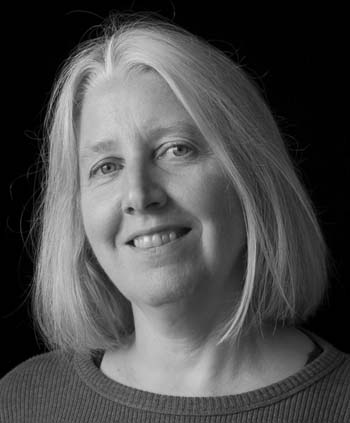
Felicia Rice portrait

Whirligig: You started Moving Parts Press in 1977 as a printshop in downtown Santa Cruz. How did you come to letterpress?

Felicia: When I was a kid a friend’s mother had a letterpress in the family room. It was a little table top pilot press. I can remember standing in the room and seeing it, and maybe touching it.

My folks were artists and teachers: my mother was a sculptor and kid’s art teacher. I grew up in her art classes and was exposed to all types of fine arts. My parents were founding members of the Mendocino Art Center. My father was a mosaic artist in the Art and Architecture movement in San Francisco working with Lawrence Halprin. He did pool bottoms and walls. Later he made independent fine art animated films.

The critical point came after I had left home. I was living in Berkeley around the corner from David Lance Goines’ studio and letterpress shop. My mom accidentally sent me one of those San Francisco Chronicle Weekend Edition articles on “Letterpress Printers of the Bay Area.” Adrian Wilson, Jack Stauffacher–there were about five of them. She accidentally sent it to me instead of my older sister. So I’m reading this thing and looking in the window at what’s going on around the corner. I started thinking this might be something I could get into. It didn’t necessarily mean I had to stay with it. I was 18 or 19 and thought maybe I could learn more. I went to Laney College which had a print and graphics program. The instructor said, “If you want to be a printer you need to get into computers.”

It was a time when there was a lot of support for crafts. A lot of my peers who grew up in California were carpenters or in the trades, which were highly respected. And the newspapers listed a lot of jobs for printers; so I thought I could be a printer. I could get work. At Laney there was some old letterpress stuff, but there was mostly this idea that one would go on to computers. It was interesting. I had also taken a printmaking class in Oregon around this time. I thought I could go to school for this but if it was just a fluke I could change my mind and do something else. I started looking around for print programs. There wasn’t really anything going on in the Bay Area. I came down to Santa Cruz with a friend to visit the school, and a friend of my friend said there was a press in the basement of Cowell College dining hall. So we went down there and there was this beautiful letterpress studio with a Vandercook, type and floor to ceiling windows with a gorgeous view of the bay. That’s how I got started. Jack Stauffacher was teaching.

Read more

Jody Alexander

Jody Alexander The Artist in Her Studio

Santa Cruz based artist Jody Alexander is known for creating complex characters whose narratives are revealed through an array of artifacts which almost always include handmade books and are often exhibited as interactive art installations.

Her work celebrates collecting, storytelling, and odd characters.

Alexander has just completed two solo exhibitions: Jody Alexander: Sedimentals at Mohr Gallery in Mountain View, California; and The Odd Volumes of Ruby B.: An Installation at Saffron and Genevieve in Santa Cruz, California.

In the first half of 2011 Alexander’s work was included in: The Art of the Book at Donna Seager Gallery in San Rafael, California; The Book: A Contemporary View at Delaware Center for the Contemporary Arts; Reconstructions at Conrad Wilde Gallery in Tucson, Arizona; Encaustic with a Textile Sensibility at Kimball Art Center in Park City, Utah; and Masters: Book Art published by Lark Books.

Alexander has a BA in Art History from UCLA and a MS in Library Science from Simmons College in Boston.

Whirligig: How did you come to be interested in the book as an art object?

Jody: While working on my Master’s degree in Library Science in Boston, Massachusetts. One of my professors took our class to Harvard’s Houghton Library. He began by showing us medieval manuscripts: Book of Hours, Gutenburg Bible, Nuremburg Chronicles amongst others. Obviously, this was very exciting to examine these treasures up close, but then he started taking out artists’ books. I don’t think I had ever seen an artists’ book before, and if I had, I wasn’t really aware of them as a genre of art. I think that I couldn’t breathe for a little while. I had one of those moments when everything suddenly made sense and it was clear that this is what I wanted to do. I proceeded to do every remaining project in Library School on artists’ books: their history, collecting them, storage and preservation of artists’ books, etc. As soon as I graduated I started to make them.

Whirligig: Tell us about the first book you made.

Jody: When I was about eight or nine I know I made some small books. I used to draw a hillbilly family and type out their story on my green portable Sears typewriter. These eventually became little books. I’m not sure how I bound them. They were just little pamphlet books. They no longer exist.

Jody Alexander Eleven Exposed Spines

Read more

Julia Bradshaw

Photographer and video performance artist Julia Bradshaw is exhibiting seven different series of work in her first one person show at Fresno City College this month. Her work often comments on language and the mixed messages of cross-cultural exchanges.
Bradshaw was born in Manchester, England. She spent nine years working and living in Munich, Germany where she studied with Michael Jochum before coming to California in 1995. She received her MFA from San José State University in 2007. Bradshaw is Assistant Professor of Photography at California State University, Fresno.

Whirligig: At Fresno City College you are exhibiting seven different series of photo-based works: Cut Pieces (2010), Case X (2010), Nocturnal (2010), On Photographing Breasts (2009), Tissue Blowing Project (2007), Constraints (2003), and Companions of my Imagination (1994). What is the thread between these bodies of work?

Julia: I am interested in the photographic series as a means to problem solve or comment on everyday life. Apart from the Nocturnal series, all of these projects have something to do with our culture and society. Cut Pieces, On Photographing Breasts and Case X are all linked in that they have to do with my investigations into libraries and books. They consider book content, the public’s misuse of books and a library’s policy on “protecting” books. The Constraints Series has to do with the various societal dictums that potentially have something inherently good and bad associated with them. For example, I have an image and text combination I call “polite conversation.” In this image I am trying to say that “polite conversation” is positive in that it ensures a civil society, however it also has a negative aspect in that polite conversation also can prevent people engaging at a deeper level. Likewise in the Tissue Blowing Project I am also thinking about language. In this project I visually represent miscommunication, disputes, failed advances, diametric viewpoints and avoidance and absence in relationships.

Read more

Pod Post

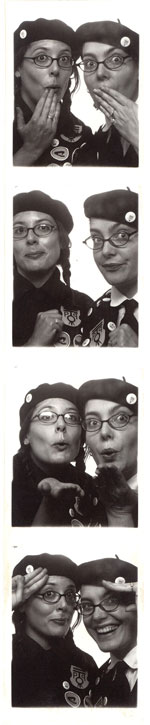
Pod Post, the mail art duo comprised of artists Carolee Gilligan Wheeler and Jennie Hinchcliff, has become an icon at Bay Area print, book, and zine fairs. Their presence is memorable in part due to their complete-with-merit-badge uniforms, their much sought after collectible mail art ephemera, and their passion and advocacy for all things postal.

In late 2009 their book, Good Mail Day: A Primer for Making Eye-Popping Postal Art, was published. It quickly sold out and has gone into multiple printings. Good Mail Day—a resource rich in visual, historical, conceptual, practical and hands-on information—was created by two inquisitively whimsical pods who know how to correspond.

Whirligig: What is Pod Post?

Carolee: Pod Post—the name—started out as a brainstorm when Jennie and I were on the airplane to Tokyo in 2005. We like alliteration, and we had been playing around with the concept of a pod as a carrier of potential. After that, we discovered that one of the early national mail delivery services was called Post Office Department.

Pod Post originated as an umbrella for our postal and correspondence obsession, and we started making things under that name, rather than our individual “press” names (Jennie’s was Bubble and Squeek at the time, and mine was superdilettante), to denote that it was a partnership separate from our individual work.

Jennie: Carolee summed up the idea of Pod Post nicely—the entity came about organically, based on our mutual love of all things postal and correspondence related. Once we started appearing together at book fairs and expos as “the Pods,” we quickly realized that there were plenty of other folks out there who were just like us: people who agonized over the perfect fountain pen, searched eBay for exotic airmail envelopes, and knew their postal carrier by first name.

Read more

Jane Reichhold

Jane Reichhold is an internationally recognized and award-winning artist and poet, prolific writer, editor, publisher, and scholar based in Gualala, California. Jane has written thousands of poems and published nearly 35 books on haiku, tanka, and renga, including Basho: The Complete Haiku (2008); Ten Years Haikujane (2008); and Writing and Enjoying Haiku: A Hands on Guide (2002). Jane is a co-editor of LYNX, the publisher of AHA Books, and editor of AHA! POETRY where she keeps the practice of writing successful haiku and other Japanese poetry forms alive and lively.

riverabove

Whirligig: You spent over twenty years working on Basho: The Complete Haiku. What compelled you to create this book? Can you talk about your motivations and processes?

Jane: I felt that if I could really see how Basho wrote his hokku, by seeing each word he used and not some translator’s idea of what a haiku could be in English, I could figure out how to write a better haiku. I started first by collecting every translation of each of his poems and comparing them. Then I asked Japanese friends to give me a word-for-word translation. I began to study Japanese but still depended on Japanese translators. My only contribution was to understand how Japanese poetry works and to make the translations fit or follow these precepts.

Whirligig: That’s a very humble response for twenty years of work which resulted in invaluable insights for both Basho and haiku scholars and enthusiasts.

Jane: Truth, like haiku, is so simple.

Whirligig: What initially drew you to haiku?

Jane: On the sale table at City Lights Books Store in San Francisco, in 1968, I found a Peter Pauper book of translations for a quarter. Though I had been writing poetry since college, I felt that here in the Japanese poems was a new way of expressing poetry. Soon afterwards I was making a vessel on a potter’s wheel and just as I pulled the clay upward a bird sang out. I had the feeling that it was the bird’s voice that caused the clay to rise. I realized that in this coincidence what I felt was the same kind of inspiration Japanese poets valued.

Read more

Alice Templeton, poet

Alice Templeton is winner of the New Women’s Voices Prize in Poetry (2008), which she received for Archaeology: Twenty-one Poems. Alice is a poet, musician, songwriter, educator, and scholar. In 2007 she received the distinction of honorable mention from the Robinson Jeffers Tor House Foundation for her poem Homing. Journals which have published her work include: Poetry, 88, Puerto del Sol, and Many Mountains Moving. She currently teaches creative writing and literature at the Art Institute of California in San Francisco.

alicetempleton_sm

Whirligig: When we first met you told me your poetry was about nature, but it actually encompasses so much more than what might typically be called nature poetry. I see yours as more like landscapes with an aftermath of human residue. What inspires you to write?

Alice: That’s a wonderful description of it. I think I am very place oriented, and that place is the way I measure what I feel and think. In the poetry I try to define, through concrete imagery and language, where I am so that I can know how far I’ve come—what my thoughts are now, what my feelings are now.

I often write about the places that have been meaningful to me, like my parents’ farm where I lived during high school and have continued to go back to throughout my adulthood. I think those images, those cycles of labor that we went through on the farm, were formative in my sense of who I am and what language is. I hear my parents’ voices and phrases a lot. I hear that connection between the language and the tools and the landscape. So landscape does shape my poetry, but I’m also interested in and driven by philosophical and cultural questions like: What is justice? and What is history?  Hopefully those human things inform my poetry as well.

Read more

Kent Manske, visual artist

A Conversation with Artist Kent Manske

Kent Manske is a visual artist working in traditional and hybrid forms of print media. He is a professor of art at Foothill College where he teaches graphic design, printmaking and books as art. His MFA is from The School of the Art Institute of Chicago. This interview was conducted upon the publication of a book on Kent’s work titled Re:ad.

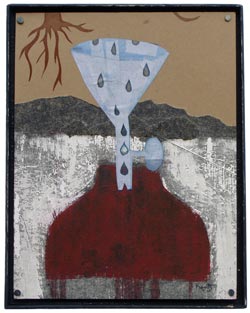
funnel

Whirligig: Why do you make things?

Kent: To make sense of things I don’t understand, like my feelings about humanity. I’m compelled to process matters of our existence, like why we believe what we do. I make things to find my own peace, even though much of what I explore is not peaceful. Sixteen thousand people die per day of hunger related causes. The Arctic is melting and the oceans are rising. Exploring issues and concerns help me recontextualize my own reality and make sure I’m not living in a total state of deception. Art helps me to take responsibility for the privileges I’ve inherited.

Read more