A Conversation with Macy Chadwick
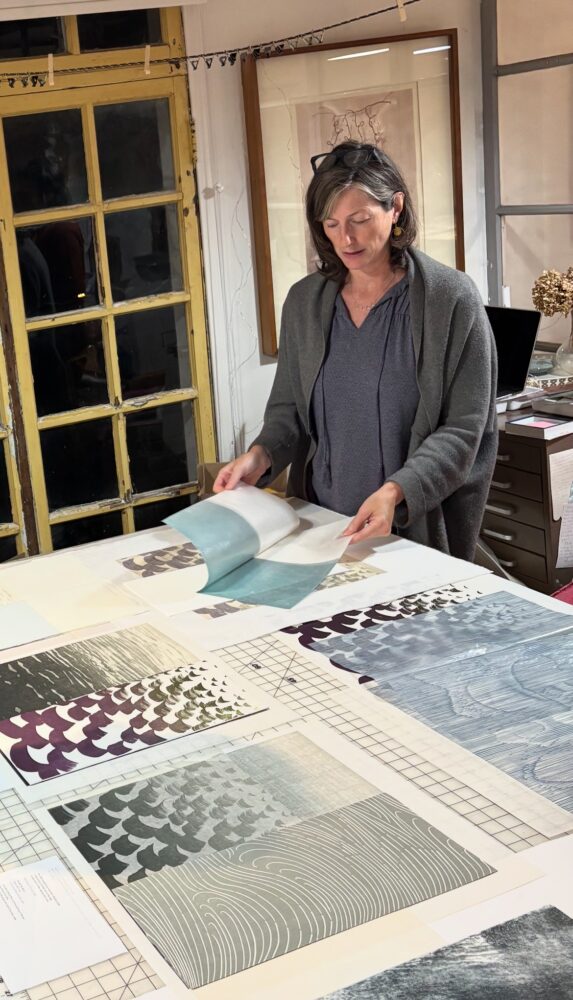
Macy Chadwick is the founder and director of In Cahoots Residency in Petaluma, California. Macy is remarkable as a creative residency host in part because she is exceptionally personable with a wonderful gift of giving a story, often with unpredictable humor and resulting laughter. Her own work as a printmaker and book artist is visually poetic and imbued with a sensitive essence of personal reflection. We talked about her work and the running of In Cahoots while sitting under a large oak tree on the residency grounds.
Nanette: How did you come to art?
Macy: When I was little, I loved all kinds of art, and my mom really encouraged it. I took some after school art classes starting in third grade and continued with that until high school. In order to take the advanced art classes in high school, I had to commit to being an art major in college because the goal of the advanced art classes was to help you prepare a portfolio to apply to college. So I said, yeah, I’ll be an art major in college. Then I decided I really did want to do that. I pursued my BFA, but I was never one of the artsy kids. I didn’t have purple hair or tattoos, still don’t. But I was definitely one of the creative kids, and art has always been a big part of my life.
Nanette: How did you get into printmaking and book arts?
Macy: In undergrad, I was an Illustration major and I never really loved it. I had loved drawing in high school, because that was just what we were offered. In college, I started taking printmaking classes to do my illustrations and then I realized I was actually more interested in making prints about my own ideas and concepts than I was in illustrating other people’s ideas. So, I ended up being a double major in Illustration and Printmaking.
This was at Washington University in St. Louis. I was very interested in putting my prints into a sequence. At the time, they didn’t have book arts there, so I went to the library and checked out the Japanese Stab Binding book—the one with the green cover. I don’t know why, but that’s the only book on book arts techniques that every library seems to have. So, I learned stab binding, and I taught myself a couple of other bindings in undergrad.
Between undergrad and grad school, I took Book Arts classes at Oregon College of Art and Craft with Barb Tetenbaum. It was from Barb that I learned the foundation of everything I know about book arts and letterpress printing. I’ve learned more over the years, but Barb taught me so much. As happens with your first teacher—you still reference what they taught you, and who they admired. Barb admired Tim Barrett, Hedi Kyle, Patty Scobey, Julie Chen, and Gary Frost. So, I still admire all those people, and others, too. I continued to study Book Arts and Printmaking in grad school and then I learned more when I moved to Berkeley to work for Julie Chen.
Nanette: When was that?
Macy: I moved to Berkeley in 2003. I had graduated from Wash U in 1994. The rest of the nineties I lived in Portland, Oregon. I studied with Barb at the Oregon College of Art and Craft, which has since closed. Then I went to grad school at the University of the Arts in Philadelphia, from 2001 to 2003. UArts closed recently as well.
Nanette: You’re like a bad omen or something.
Macy: I think so. I feel like my art career is like a little red carpet rolling up behind me. Wherever I go, it rolls up behind me. Better not have me around! [laughter] I taught at San Francisco Art Institute, and it closed too. So many places that I loved, where I taught and learned, have disappeared.
Nanette: I know it’s hard. Hard to have things close up.
So you are primarily a bookmaker now? Are you working in prints that aren’t books?
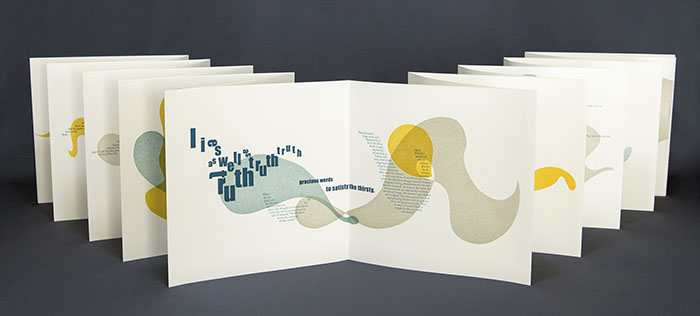
Macy: I’m very interested in making prints that aren’t books. I kind of structure my life around the CODEX Book Fair. So when it’s a non-CODEX year, I create different things besides books. I like to make prints. I like to make collages, but then those images or ideas inevitably end up leading me towards another book project. I do really identify as both a book artist and a printmaker.
Nanette: You make a book every two years to present at CODEX. And those are small editions?
Macy: Right. My artist’s books are complex projects, some large in scale, but made in small editions. I used to make editions of 40 or 50 copies, then four years ago, I did an edition of 25, and then my last edition was ten. My editions keep getting smaller! I think the advantage of doing an edition of ten is that I can actually get it completed and move on to other projects. With larger editions, I sell ten or 20 of them, and then the rest of the unbound pages sit in my flat files waiting to be bound. Sitting there threatening me, pointing their fingers at me, “You better get back here and bind us!”
Nanette: It’s one of the tricky things about working in multiples. How many do you make.
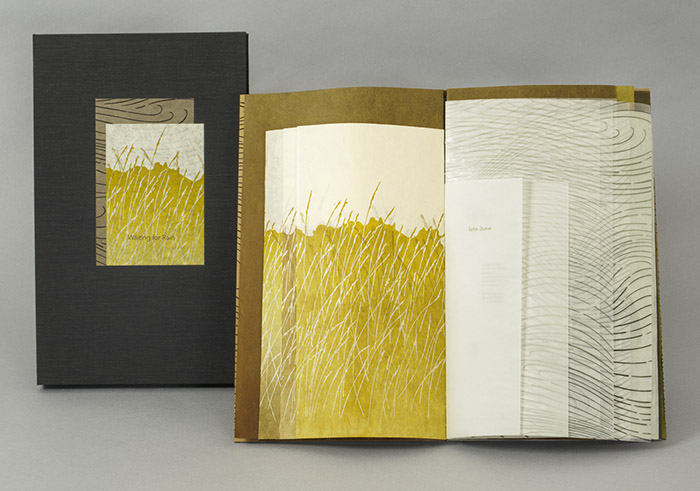
Macy: Right. And I think if you make these larger editions, you better have the storage space for them. There are some book artists that sell out of their editions that same year, but I’m not one of them, unless I make ten. I sold out of ten! I’ve got to find my sweet spot. This year, I think I might make an edition of 15, see if I sell out of that. I like to not have a huge backlog of editions needing to be bound– all these unfinished projects hanging around, you know?
Nanette: How do you define your work conceptually? What’s your content? Focus?
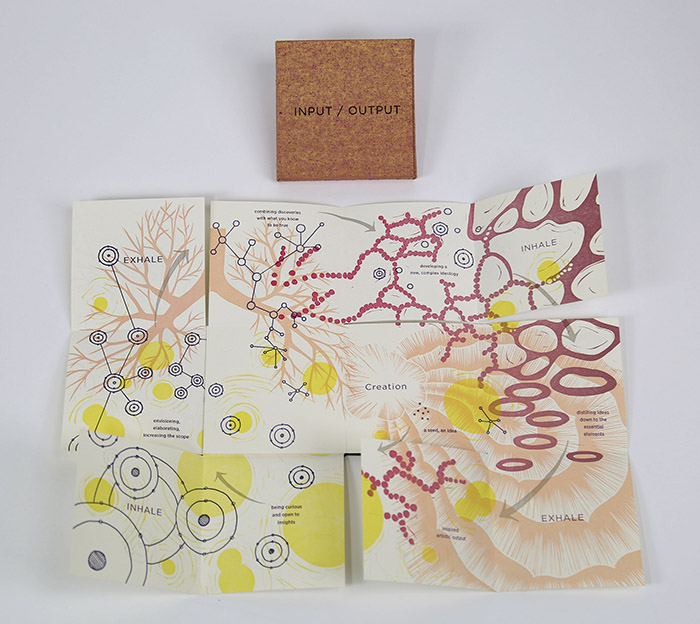
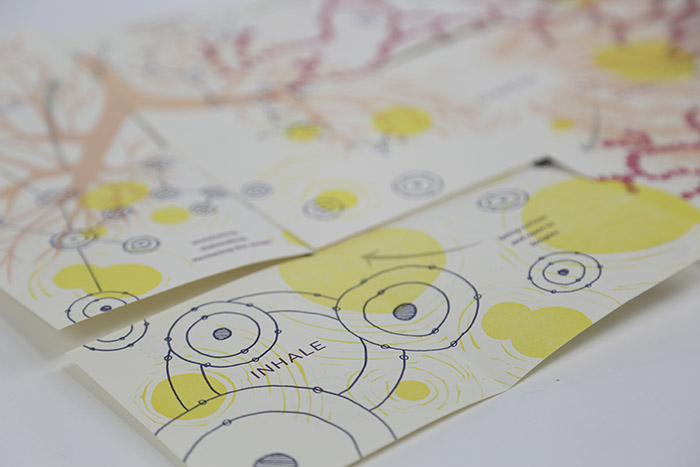
Macy: I’d say my focus is primarily communication, connection, human experience. I usually make a book that’s based on something that I’m either wrestling with or experiencing in my life and then I hope that it resonates in a more universal capacity.
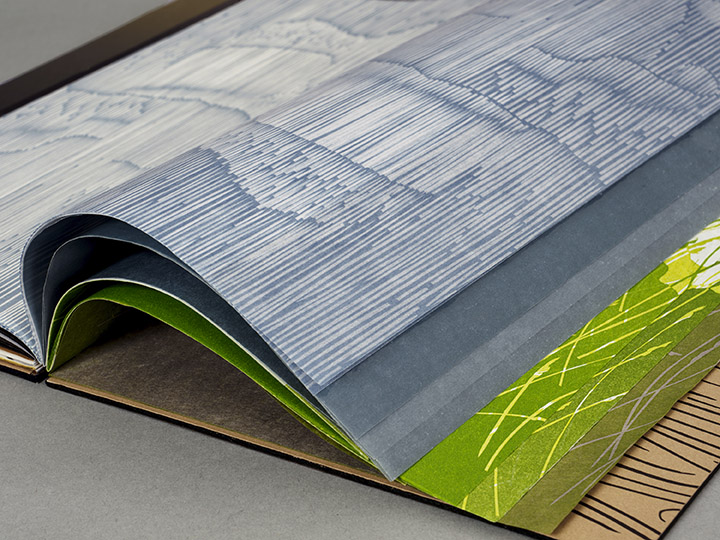
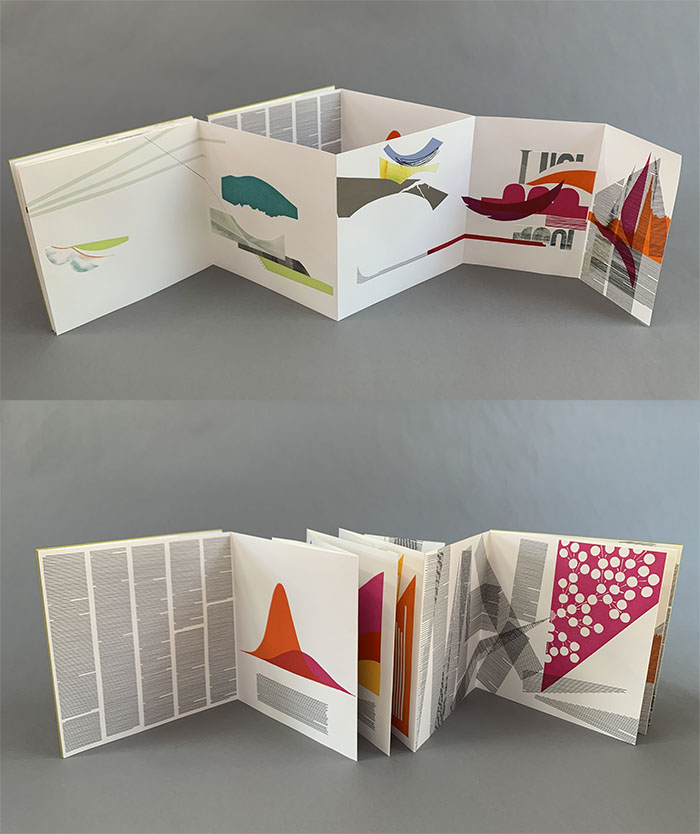
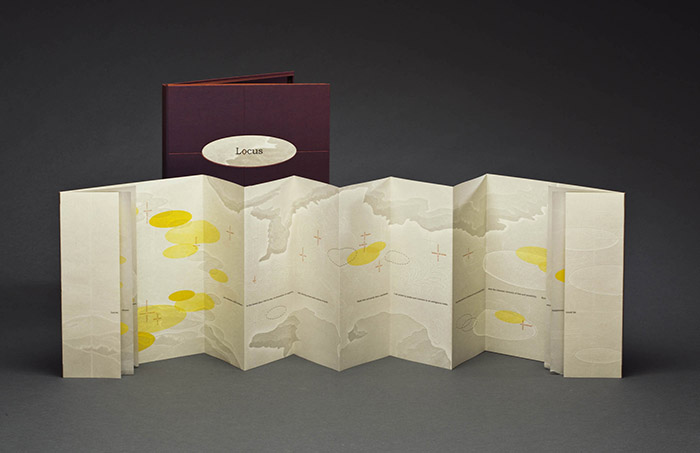
One of my books was called Locus and it was about leaving California and moving back to the east coast for a year. I didn’t know it would only be a year. I thought it was going to be longer. I made a book about this idea of leaving the familiar and going out into the unknown and taking this chance to do something, not knowing how it’s going to end up. What I loved about that book was it was about a very specific experience for me, but other people related to it in a deeper way. When I presented Locus at CODEX, people read it and said, “Oh my God, this spoke to me because I just left my job” or “because I just got a divorce” or “because I also made a big change and took a leap.” That’s what’s really rich for me, when something that I make can really resonate with somebody else. That’s what I live for, you know?
Nanette: That audience connection is important?
Macy: Yes, really important. Some people make work for collectors or to get into a museum or gallery, and I make work to connect with my audience. But I have found that if my work doesn’t resonate in some way with me, then it’s not going to resonate with other people either, you know? So whenever I’ve fallen into the trap of, I’m going to make this thing because it’ll sell, it never works out because it doesn’t have authenticity.
Nanette: Yes, authenticity is important.
Macy: Definitely. Truly speaking from the heart and making something that is authentic for me. I think this is what makes my work resonate with other people.
Nanette: I’ve found things that I’ve experienced; there’s other people that experience them too.
Macy: Yes. Totally.
I remember there was an interview with Julie Chen, way back, that I showed to my classes. I had it on a VHS tape. I think it was a Bay Area program called Spark. I remember the interviewer asked Julie what her work was about and she said she wanted people to know that they’re not alone. It was really sweet. That’s kind of what you’re talking about, too. The connection with people, even if you don’t know them, connecting over a common experience or a common value.
Nanette: Tell me about the book you’re working on now.
Macy: I’m working on a book about my dad’s ocean voyage. I have been working on it for probably about eight years, which is an unusually long time for me. But, since starting this book, I founded the residency, and then two other books “cut in line.” These were books I created specifically for themed invitational shows.
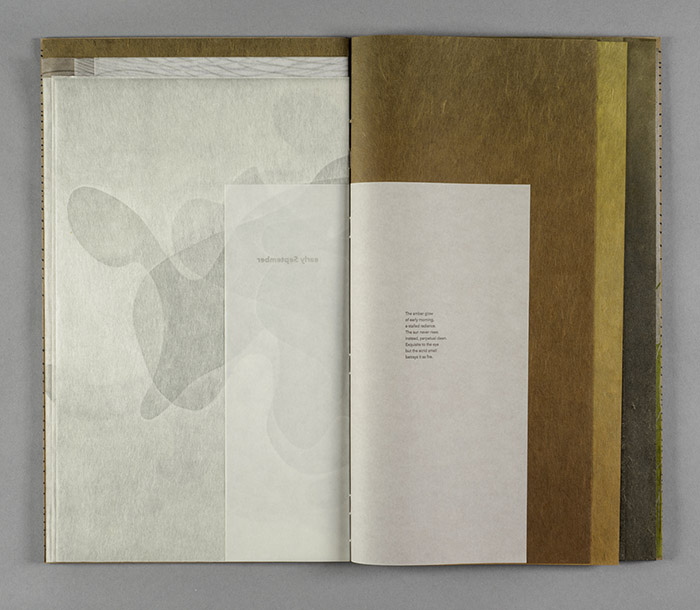
But now I’m back to working on this book about my dad traveling across the Atlantic in 1960, in a sailing race. As a young girl, I thought he traveled across the ocean by himself. I was like, My dad’s my hero!
Turns out, it was a race on a boat with a crew of 12, sailing from Bermuda to Sweden. They sailed all the way across the Atlantic Ocean in a time when there wasn’t GPS or radar or any way to navigate except by the stars. That is so fascinating to me and also, so frightening to me.
The story is about trying to connect with my father because he is a man who speaks in time and temperature and measurement. If I ask him about his vacation, he’ll tell me which highway they took and how long it took to get there rather than what they saw once they were there and how it felt. So, I’m always trying to find the middle ground between the way he tells stories and the way I tell stories. In making this book, I’m hoping to find that middle ground.
What I just figured out this week is that I’m going to make a set of two books in a box rather than trying to put both of our voices in one book. I have his journal entries, and my poem. I was having a hard time puzzling how the lines of my poem disbursed throughout the book could then be interrupted by his long journal entries about his voyage, and finally I thought, wow, these two books can be separate, but talk to each other. The viewer can have the option of which one they pick up first, or go back and forth.
Nanette: You’re working with his journal?
Macy: I am. He has a really thick notebook of all the records he kept on that trip. He won’t give it to me, but he has transcribed parts of it for me.
Nanette: It’s the numbers, it’s not the emotional feeling part?
Macy: At least not the parts that I’ve seen. It’s really a logbook. It’s about barometric pressure and distances, time and temperature, and then a few stories about how they almost ran into a shark, the storms they encountered, and when the freezer broke suddenly, so they had to eat everything before it went bad. The adventure of it, but it wasn’t really about his feelings. I have huge feelings about what I imagine it’s like to be out in the middle of the ocean with no land in sight and no way to navigate other than the stars.
My part is a poem and a visual interpretation of the story—the imagined imagery, the feelings, the emotions.
Nanette: Is he a professional sailor?
Macy: My dad was never a professional sailor, but he was a passionate sailor. He sailed his whole life; different sailing races, and weekend trips with us kids. We never owned a boat, but he would often borrow people’s boats. Then for 20 years or so of his retirement, he had a small power boat that he and his wife could stay on overnight. They would go on boating trips on the coast in Maine. He was also a sailing judge for official races in Newport, Rhode Island. They’re the ones who say, oh, you cut that guy off, you didn’t sail by the rules, you’re disqualified from your trophy, that kind of thing.
Nanette: How did you come to create In Cahoots?
Macy: I was an adjunct teacher for 15 years, in San Francisco. I mostly taught at the Academy of Art and at San Francisco Art Institute. One semester, enrollment was low at both schools; I had no classes at all to teach. I just said, Okay, this is not sustainable. I had looked for full-time teaching jobs, but I really didn’t want to leave the Bay Area and it was very competitive to get a tenure track job. I realized I needed to stop teaching, despite loving it very much, and find something that was a more reliable way of life.
So I thought about the things that I love: sharing studio space, teaching, and hosting artists. At the time, I was renting out a couple of rooms in my house in Oakland, sometimes to artists visiting from other places to work at Kala, and I really enjoyed that. I thought about what combines those three things. I had been to some artist residencies—and I thought that was just the thing!
People always ask me if I did a bunch of research. Other than going to some residencies, I really didn’t. I just jumped in and hoped for the best. It has worked out because there aren’t that many printmaking residencies and there are certainly not a lot of letterpress or book arts residencies. So, it turns out that there is a need for what In Cahoots provides, and people are interested in coming here!
I wanted to leave the city and be a little bit more rural and have more space, but I wanted to stay within driving distance of the Bay Area. I started looking for properties in Santa Cruz and in Sonoma County. I found what is now the In Cahoots property. It had a large unfinished barn that could be a studio, and a couple of guest houses, plus a main house for me to live in. So, it was the perfect setup and luckily it was in Petaluma, which is just a super place to live. Petaluma is charming, it’s just the right size and it’s less than an hour from San Francisco, so it’s easy for people to get to. I don’t feel too isolated and I get to have all these cool artists here all the time.
Nanette: You seem to enjoy that, too.
Macy: I do. I really enjoy that. I think this place is meant to have people in it, you know, it has that energy. When I have a week off of hosting, it’s great to be able to use the studio space, but it doesn’t feel right to have it all empty. I mean, In Cahoots is meant to be a community kind of space, so I love when the resident artists are here. We are open year-round, hosting artists three weeks out of every month.
Nanette: What have been some of the challenges of running In Cahoots.
Macy: I would say the facilities have been some of the challenges, learning to live rurally, plumbing issues, septic issues… all the constant repairs of a country property are pretty challenging.
There really have not been many challenges in terms of who comes here because printmakers are such great people and they know how to share. It’s just a really lovely population to host.
It was challenging at first to be so far away from Oakland and the Bay Area, which I know very well, but I really fell in love with being up here.
I think climate change has also been a challenge. The dry season can be pretty threatening and long when there are fires nearby and smoky skies, which, knock on wood, has not happened in the last three years quite as much in this area. But there are fires everywhere now in the dry season, so that’s been a constant threat. I’m more aware of it up here than I would be in the city where you hear about climate change in the news or maybe the skies are smoky but it’s not quite as threatening as it is when you live surrounded by a field of dry grass.
Nanette: So you keep all this mowed. . . how many acres? Four?
Macy: It’s almost four: 3.8 acres.
Nanette: That’s a lot to mow.
Macy: It is a lot to mow! The neighbor’s horses come and graze for three or four months every year. I call them my little lawnmowers. They take care of most of the big field, but they probably only eat half the grass. The rest we have to mow, the parts that are around the buildings or the garden and that kind of thing. The horses will just trample the garden if we let them go everywhere!
Nanette: How did you consider to bring writers in?
Macy: Hosting writers along with visual artists has been part of my vision for In Cahoots from the beginning. There’s a wonderful little writer’s cabin on the property. When I first walked in there, it didn’t seem like a sleeping space, and it didn’t seem like a making space. It felt like a writing space.
Because I’m a book artist and I write for my own work, I wanted to host both writers and visual artists, and that has turned out to be a rich combination. Most summer sessions we have one writer and four visual artists. In the winter we only host three people, so there are writers occasionally during those months.
Nanette: Any little stories about residencies that come to mind to share.
Macy: Last session we had an artist from Palestine and an artist from India. The artist from India had never left India before in her life. So it was really fun to show them this part of America.
I take artists to the grocery store weekly, and both of them said they wanted organic produce. We went to the farmer’s market and they picked out all these beautiful fruits and vegetables, and then they needed a few supplies at the regular grocery store. When we got there, they immediately started saying, “Do you have Pringles? Do you have Cheetos? Can we get Captain Crunch?” [laughter] So they filled their baskets with the most god-awful American junk food. It was so funny– the selection of things from organic produce to Captain Crunch that they wanted to buy. It was a thrill for them to experience a huge American grocery store.
It felt really important to host international residents, and I felt kind of like a diplomat, making this bridge between our countries in this way. I was moved by showing them our culture (that not all Americans are Trump supporters!) And showing them some of the beauty of California: the redwoods, the Russian River, the coast. I made sure that they had a really good time here, and of course, plenty of creative time in the studio.
Nanette: Your reach has become international.
Macy: Yes, it has! The first couple years I had residents from England, Canada, Germany, and Scotland. Because of the pandemic, the international reach really slowed down. In 2020, we were just hosting people who could drive here. Then slowly our cohort of artists became national again, and now I’m beginning to have more international people applying. In recent years we have hosted artists from Mexico, Chile, India and Palestine. I do worry a little bit about our border police right now, but recent residents made it through fine, which was great. I look forward to when the U.S. doesn’t have such strict policies and we can have international people here without worrying about them getting stopped in customs.
It’s wonderful to have a real mix of people in the studios. I try to host artists from a variety of places so that people can meet each other. It’s more enriching that way.
Nanette: Can you say how many people are applying and how many you are turning away?
Macy: Yes. At this point we are able to accept about a third of the people that apply. We do have a really good, healthy waiting list. If there are cancellations, I do look at the waiting list and see who can fit in that spot—depending on the time of year and the equipment they requested. If it’s a last-minute opening, I also consider how far the waitlist folks have to travel. Some years, if there’s a bunch of cancellations, I go pretty deep into the waiting list, which feels good. I’m passionate about giving people who are interested in coming here a chance to come, if at all possible. I don’t love sending out those letters that they didn’t get accepted. That’s not my favorite day at all.
It’s very exciting to send out the acceptance letters. We have a grant program and we do quite a bit of fundraising. We have an auction every March and then we also do a fall fundraiser to ask for donations. We have a fiscal sponsor for accepting tax-deductible donations. Last year we were able to raise enough to award $20,000 in grant funded residencies, which is really great. We are able to select a few artists that get full grants, but usually I try to spread out our available funds as much as I can to give partial grants to residents who have financial need. Unfortunately, we can’t give grants to just talent; we have to consider talent plus financial need.
Nanette: What are your hopes?
Macy: For the whole endeavor? I think my hopes are being met right now: to create an important and warm community for printmakers and book artists and writers to have space and creative time. I think one of my greatest joys is when I see that people who became friends here are still in touch or are collaborating or visiting each other. I had an artist here from Scotland and I know that two of her fellow residents here at In Cahoots have been to Scotland to visit her. That’s really exciting when you see people making these connections in just a couple of weeks here, and then continuing those relationships beyond that.
It is so rewarding to help support artists with space and time to be creative. It’s really touching to me when people come here and they haven’t had time in the studio because of taking care of children or elderly parents, having a full-time job, or whatever it is. Then they get their creative groove back when they’re here at In Cahoots and that’s so important and so sweet to witness. I love supporting that.
Macy Chadwick received an MFA in Book Arts and Printmaking from The University of the Arts in Philadelphia and assisted book artist Julie Chen at Flying Fish Press in Berkeley for three years. After 15 years of teaching at the Academy of Art University, San Francisco Art Institute, and San Francisco Center for the Book, Macy moved up to Petaluma, California, where she is the founder and director of In Cahoots Residency. The residency provides housing and studio space to both emerging and professional artists with a focus on artist books, letterpress, printmaking, writing, and collaboration.
Macy continues to create books and limited edition prints in her letterpress studio. Her work is in prominent collections in the U.S. and abroad, including the Victoria and Albert Museum, Yale University Special Collections, and the Jack Ginsberg Collection in South Africa.
www.macychadwick.com
In Cahoots Residency
This conversation between Macy Chadwick and Nanette Wylde took place in August 2025 at In Cahoots Residency in Petaluma, California.